
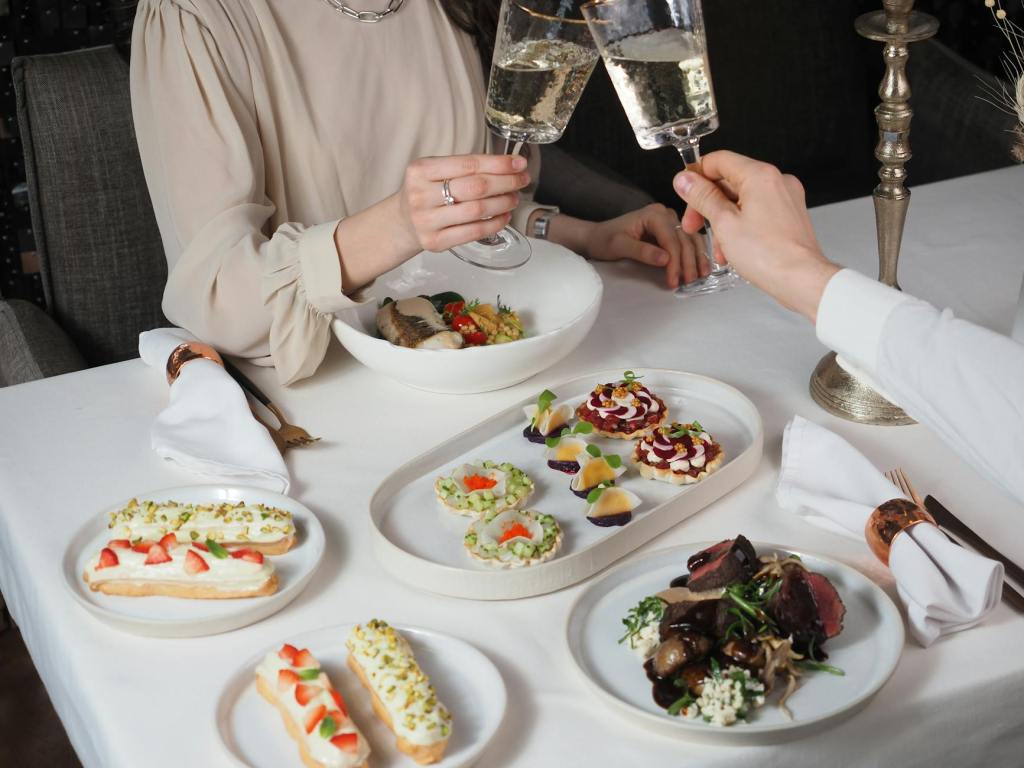
It took me a long time to understand this, mostly because I grew up in a house where food mattered deeply. I hosted many dinners alongside my mother, watching how much care went into planning a menu, how early preparation began, how much pride lived in what was served. Later, when I had my own home and my own table, I carried that same instinct with me, the belief that a good gathering was built on a good meal.
And that part is still true. Food has always mattered to me. I spent years working as a chef, learning how much care goes into a well-made meal, and later, how that care shows up differently when you’re hosting at home. But over time, I began to notice something quieter happening around the table.
I couldn’t always remember exactly what had been served at certain dinners, even ones I knew were beautiful and well thought out. What stayed with me instead was the way the evening felt. Whether people lingered or rushed. Whether conversation flowed easily or felt interrupted. Whether the host was seated, laughing, part of it, or moving constantly between the kitchen and the table, half-present, half-managing.
Somewhere along the way, I realized that the meals people remembered most fondly weren’t always the most elaborate ones. They were the ones where the host seemed relaxed. Where the food arrived and stayed put. Where no one felt rushed, and no one felt like they were being evaluated.
I’ve learned that great food doesn’t need constant attention to be meaningful. In fact, the best meals often hold on their own. A slow-cooked dish that’s just as good after sitting. A baked pasta that comes to the table bubbling and generous. A roast, a braise, something comforting that doesn’t demand precision at the last minute. Food like that creates space… for conversation, for ease, for the host to actually sit down and eat while it’s still warm.
Over time, I stopped planning menus that required constant pacing. I stopped choosing dishes that needed explaining or perfect timing. Instead, I began thinking about how everything would arrive at the table and whether it could stay there. Family-style serving became less about style and more about freedom. When food is shared and set out all at once, something shifts. People relax. The host relaxes. The evening stops feeling like a sequence and starts feeling like a moment.
I’ve also learned that people take their cues from the host, whether we realize it or not. If the host is hovering, apologizing, announcing what went wrong or what could have been better, the room tightens. But when the host sits, eats, laughs, and lets things unfold, the entire gathering softens. Suddenly, the food is simply part of the experience, not the performance of it.
This doesn’t mean effort disappears. It just moves earlier in the day. The care is still there, but it’s quiet. It shows up in choosing a menu you trust, in finishing most things before guests arrive, in letting dessert be something that doesn’t pull you back into the kitchen for long stretches. It shows up in lighting a candle and then leaving it alone.
What people remember, I’ve learned, is how they felt being there. Whether they felt welcome to take another helping without asking. Whether they felt comfortable staying longer than planned. Whether the evening felt warm and unrushed. They remember the way the host made space, not just on the table, but in the room.
Food supports that feeling. It always has. But it doesn’t need to compete with it.
The gatherings that stay with us aren’t defined by how impressive the menu was. They’re defined by how easy it felt to be part of them. By the moment when plates were half-finished, conversation kept going, and the host was finally seated, not managing the evening, just living in it.
That’s the kind of hosting people carry with them. Long after the menu is forgotten.
After learning all of this, I didn’t start hosting less thoughtfully, I just started hosting more honestly and efficient.
I stopped asking what would look the most impressive and started asking what would allow me to stay at the table. What would let the evening unfold without constant interruptions. What would make the gathering feel comfortable instead of managed.
That shift shows up most clearly in how the table is set and how the food is served.
I’ve learned that a table doesn’t need an elaborate centerpiece to feel intentional. In fact, the more complicated the center of the table becomes, the more it gets in the way of eye contact, of passing dishes, of conversation. Now, I almost always reach for a simple runner and a few candles. Sometimes it’s just two or three, spaced loosely down the center. Sometimes there’s a bit of greenery tucked in, sometimes not. The table feels calm, open, and ready for people, which matters more than filling every inch of space.
The same philosophy carries through to the food.
Plated meals can be beautiful, but they quietly turn the host into a server. They require timing, pacing, and repeated trips back and forth, just when the gathering should be settling into itself. Over time, I found myself returning again and again to family-style and buffet-style meals. Not because they’re easier in a careless way, but because they’re easier in a generous one.
When food is served family-style at the table, everything arrives together and stays there. Guests help themselves. They take what they want, when they want. The host eats when everyone else eats. Conversation doesn’t pause while plates are assembled or cleared in stages. The meal becomes shared, not staged.
Buffet-style dinners have become a favorite in my own home, especially for larger groups or evenings meant to linger. Setting everything out at once, whether on a sideboard, kitchen island, or dining room buffet, takes the pressure off completely. People move at their own pace. Second helpings feel natural. And once everything is set out, the host is free to step away from the logistics and rejoin the room.
The key, I’ve learned, is choosing food that’s meant to hold. Dishes that are just as good thirty minutes later as they are the moment they’re finished. Baked pastas, slow-cooked mains, roasted vegetables, hearty salads, food that doesn’t punish you for letting it be.
Some of my most reliable dinner party menus are built this way. A large baked ziti or lasagna that can be assembled ahead and baked just before guests arrive. A braised short rib or pulled pork that stays warm and rich on the buffet. A roasted chicken or pork loin sliced and served at room temperature without losing its appeal. A big bowl of salad dressed lightly and refreshed as needed. Bread that can be torn and shared instead of sliced and served.
And then there are the parts no one needs to know you didn’t make.
One of the quiet hosting skills I’ve learned is knowing when to let a store-bought item do its job. A good dip from the market can be just as satisfying as a homemade one. Especially when it’s taken out of its container and given a proper place on the table. A ceramic bowl, a small platter, a sprinkle of herbs or a drizzle of olive oil, and suddenly it belongs. The same goes for spreads, olives, marinated vegetables, or desserts. Presentation isn’t about disguising shortcuts, it’s about honoring the food enough to let it feel considered.
That’s really what all of this comes back to: consideration over complication.
When the table is simple, the food is generous, and the serving style is forgiving, the host can finally let go. Sit down. Take a bite. Stay in the conversation a little longer. Laugh without listening for the timer.
And that’s when the gathering becomes what people remember. Not because everything was perfect, but because it felt good to be there.
If there’s one thing I’ve learned over time, it’s this: the most thoughtful gatherings aren’t the ones where the host does the most. They’re the ones where the host is fully present.
 Well Gathered Here
Leave a comment